How to stop your cat from urine spraying in the house

Causes, fixes and behavioural solutions

The key to a lasting bond is confidence in your own skills. Unlock this power and train your dog to be the perfect life companion.

Dog paws iconDog ears and taill illustration
Dog paws icon
Dog ears and taill illustration

December 3, 2025

How to stop your cat from urine spraying in the house

Urine spraying is one of the most frustrating (and pungent!) behaviour issues cat parents face. The smell can be overwhelming, the stains are distressing, and the worry that something is wrong with your cat can be deeply upsetting.

The good news? You can usually stop your cat from spraying inside the house. And once you understand why it happens, you can address the root cause rather than just the symptoms.

This guide walks you through everything you need to know about why cats spray, how to stop cat urine spraying, and the environmental and behavioural changes that make the biggest difference.

Spraying vs. House-Soiling: Whats the Difference?

Before you can fix the problem, you need to identify what’s actually going on.

House-training issues (house-soiling)

  • Your cat squats to urinate or defecate on horizontal surfaces (carpet, tiles, floor).
  • Often happens near the litter box but not always.
  • Usually linked to incomplete house-training, litter box aversion, illness, or stress.

Urine spraying (marking)

  • Your cat stands upright, backs up to a vertical surface and raises their tail.
  • The tail tip often twitches or vibrates.
  • Only small amounts of urine are released, usually onto:
    • curtains
    • walls
    • doors
    • furniture
    • shopping bags or visitors’ belongings
  • The smell is stronger, especially from entire males.

If your cat is spraying, you’re dealing with a marking behaviour — not a toilet-training problem.
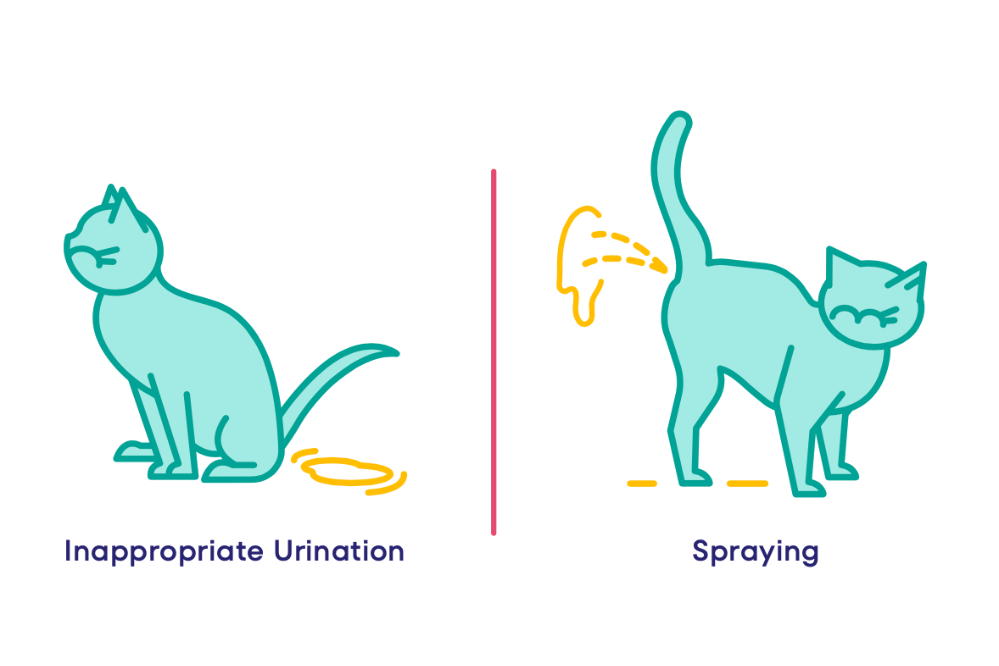
A graphic shows the difference between a cat doing inappropriate urination and a cat spraying


Why Do Cats Spray? Understanding the Behaviour

Urine spraying is a normal feline communication tool used by wild and domestic cats. Even though it’s frustrating, it’s not done out of spite. Spraying is almost always triggered by stress, anxiety, territorial pressure or competition.

Here are the most common reasons cats spray indoors:

1. Territorial behaviour and competition

This is the number one cause of spraying.

  • Entire toms spray to mark territory (their urine contains felinine, an especially strong-smelling amino acid).
  • Subordinate cats may spray to protect key resources.
  • Neighbourhood cats loitering near windows, visiting the deck, or entering through a cat door can trigger reactional marking.

Hot spots for territorial spraying include:

  • door frames
  • windows
  • cat doors
  • entryways
  • curtains
  • external walls

2. Multi-cat household stress

The more cats you have, the higher the chance of spraying.

Common triggers include:

  • competition for food, litter boxes, beds or sun spots
  • bullying between cats
  • introduction of a new adult cat
  • access blockages (narrow hallways, choke points)

Cats may spray to hold resources or indicate anxiety if they feel unsafe.

3. Changes in the environment

Cats are creatures of habit. Even small changes can trigger stress-related spraying:

  • new furniture
  • renovations
  • unfamiliar smells brought in by visitors
  • luggage or shopping bags with foreign animal scents
  • moving house
  • changes in routine

4. Neighbouring cats

Territorial pressure from outside cats is one of the biggest spraying triggers. Some confident toms even enter other cats’ homes and mark inside — causing enormous distress to the resident cat.

This can rapidly escalate into:

  • spraying indoors
  • hiding
  • aggression
  • litter box avoidance
  • stress-related illness

5. New pets (especially dogs)

Adding a new dog or cat can create major anxiety for your feline, triggering marking behaviour.

Gradual, systematic introductions are essential.


How to Stop Your Cat Spraying Indoors: Step-by-Step Solutions

Stopping spraying requires both removing the scent cues and addressing the underlying behavioural causes.

Here’s the complete plan.

1. Rule out medical issues first

Before assuming the cause is behavioural, see your vet 

Health issues that can contribute to spraying:

  • urinary tract infections
  • bladder inflammation
  • cognitive decline
  • sensory impairment (e.g., blindness)

Vets can help rule out pain, discomfort or medical triggers.

2. Thoroughly clean all sprayed areas

If the smell remains, your cat will return to the same spot.

Cleaning instructions for cat urine:

  • Use a mix of 1 part white vinegar to 3 parts water to neutralise urine pheromones.
  • Follow with an enzymatic cleaner formulated for pet urine.
  • Avoid ammonia-based cleaners — they mimic the smell of urine and make spraying more likely.
  • Use a UV blacklight to find hidden spray marks.
  • For repeat-offending areas, cover with tin foil or plastic temporarily — cats dislike spraying on these surfaces.
  • Add a pheromone diffuser (e.g., Feliway) to reduce stress.

Cleaning alone won’t fix spraying, but it prevents reinforcement of the behaviour.

3. Reduce stress and improve the environment

Environmental changes can make or break the solution.

Introduce new items slowly

If you bring in new furniture, boxes or bags:

  • rub them with your cat’s scent (cloth rubbed on your cat’s cheeks)
  • encourage your cat to investigate and rub-mark calmly
  • offer treats and play around the item

Offer plenty of enrichment

Cats with enriched environments may spray significantly less.

Provide:

  • scratching posts
  • vertical climbing spaces
  • cat trees
  • window perches
  • catios
  • puzzle feeders
  • regular play sessions

A confident, stimulated cat is less likely to spray.

4. Fix multi-cat household issues

Resource competition is a huge trigger for spraying.

Each cat needs:

  • their own food and water station
  • at least one litter tray (ideally 1 per cat + 1 extra)
  • multiple beds (3+ options is ideal)
  • sufficient scratching posts and resting places

If inter-cat aggression is an issue in the home, spraying can often be a symptom of this tension. To address this, grab a copy of my book Cat Zen and learn how to address this issue - you can get it from www.catzen.co.nz 

5. Reduce pressure from neighbouring cats

For cats stressed by outdoor intruders:

  • block outside cat access to your home
  • use microchip cat doors
  • move food sources away from windows
  • add blinds or frosted film to windows facing intruding cats
  • create secure indoor climbing and hiding spots

6. Introduce new pets carefully

Rushed introductions (especially with dogs) can create long-term stress that fuels marking. If this may be a factor, see my Cat Zen book to learn how to make these introductions in a peaceful, positive way. 

7. Consider desexing

Desexing dramatically reduces spraying:

  • 90% reduction in males
  • 95% reduction in females

Since entire males cause 75% of marking episodes, neutering is one of the most effective long-term fixes.

8. Behavioural and medical support

If stress is high or the environment cannot be changed quickly, additional tools can help:

  • calming pheromone diffusers or sprays
  • natural anxiety supplements
  • veterinary-prescribed anti-anxiety medication

What NOT to do (ever)

Punishment does not work for spraying and will always make behaviour worse.

Avoid:

  • yelling
  • spraying with water
  • rubbing their nose in it
  • time outs
  • physical punishment

These increase stress — and stress increases spraying.

Final Thoughts: You Can Stop Cat Spraying

Cat urine spraying in the house is a solvable problem — but only when addressed calmly, systematically and compassionately.

By:

  • understanding the cause
  • improving the environment
  • cleaning thoroughly
  • reducing stressors
  • managing cat-to-cat relationships
  • and ruling out health issues

…you can help your cat feel safe, confident and settled again.

If your cat is struggling, don’t lose hope. With the right support, most cats stop spraying entirely — and your home can smell fresh again!

For a complete guide to raising a gentle, resilient cat - and for addressing behavioural issues like this - see my latest book, Cat Zen. Available now - shop here. 

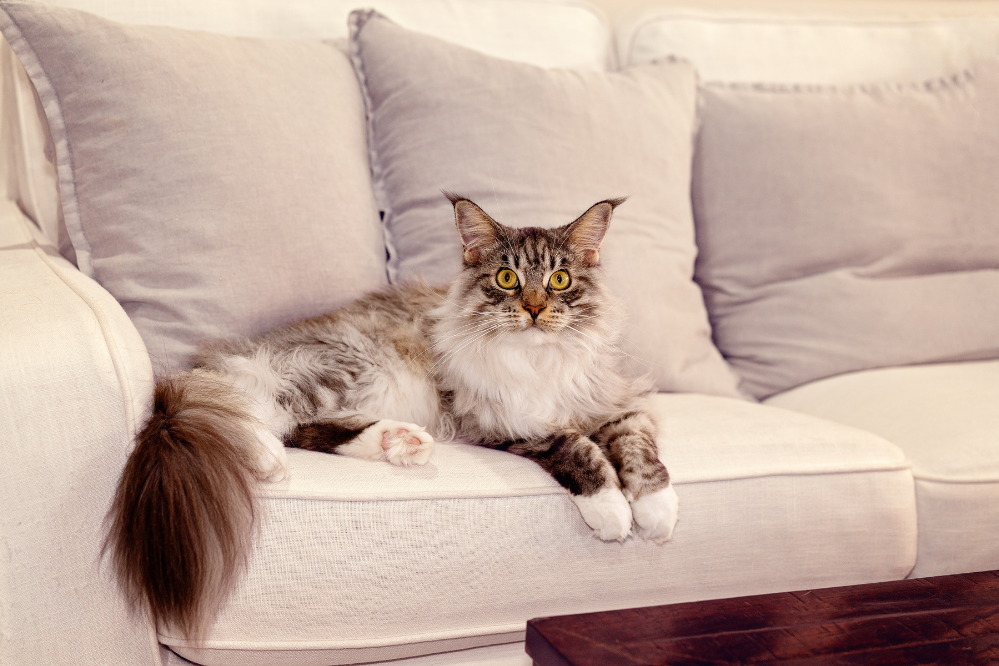
A cat that no longer has issues with spraying relaxes on the couch

Free training tips!

Sign up to our newsletter for free tips and dog training advice that will transform your relationship with your dog.

Immediately receive a free Essential Training Tips booklet
10% discount on all Virtual Schools and Store products
Regular training advice and tips
Articles tailored to your dog's stage of life
Insights into your dog
Join for free
Graphic of dog ears
Mockup of book reading Mark Vette's Essential training tips
Arrow pointing up icon